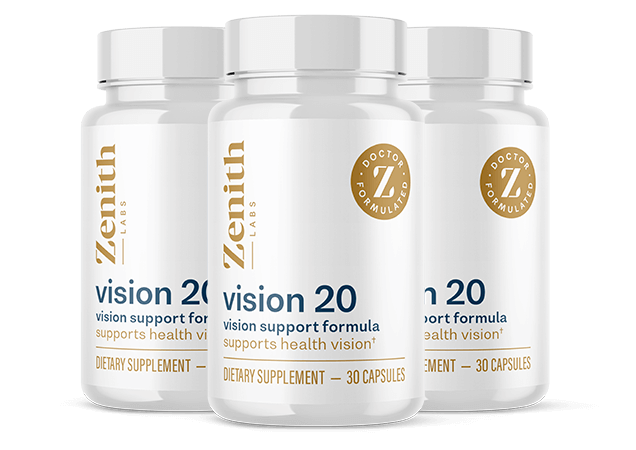
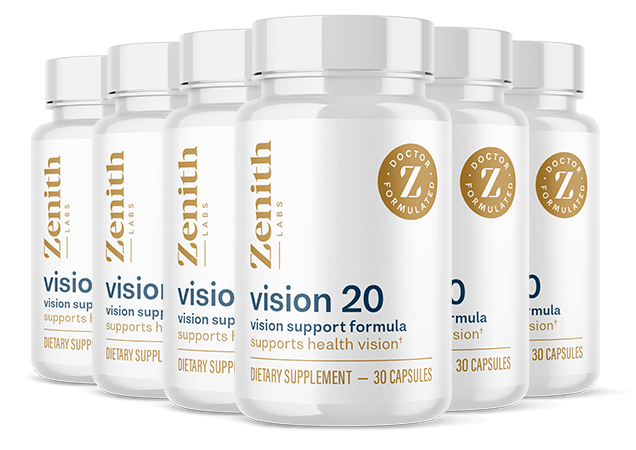
A once-daily supplement from Zenith Labs, formulated under Medical Research Director Dr. Ryan Shelton, designed to support the nutrition your eyes rely on every day — macular pigment, antioxidant defence, healthy circulation and comfortable vision in bright light, at the screen and after dark.
Glasses and contact lenses do an essential job: they bend light so the world snaps into focus. But they sit in front of the eye, and they do nothing to nourish the eye itself. Vision 20 is built on a different idea — that much of the gradual change in how our eyes feel and perform with age is linked to years of oxidative stress, light exposure and nutrient gaps inside the eye, and that supplying the nutrients the retina and macula actually use can help support comfortable, dependable vision over time.
The formula comes from Zenith Labs, a US supplement company whose Medical Research Director is Dr. Ryan Shelton. Zenith Labs describes Vision 20 as a once-daily eye-support formula built around the carotenoids lutein and zeaxanthin — the two yellow pigments that form the macular pigment, your eye's built-in filter for high-energy blue light — supported by zinc, bilberry, ginkgo biloba, maritime pine bark, lycopene, astaxanthin and copper. Every capsule is the same simple routine: one capsule a day, with or without food, at any time of day, for a full 30-day supply in every bottle.
That simplicity is deliberate. Many eye formulas ask for two or three large capsules a day, or for doses timed around meals. Vision 20 asks for one small capsule, once a day — a routine most people can actually keep for the three to six months that eye nutrition needs before it can fairly be judged. The bottle is gluten-free, non-GMO and vegan, and free of dairy, egg, soy, nuts and crustacean ingredients, according to the badges printed on the vendor's own label. The only other ingredients listed are the vegetable capsule itself, microcrystalline cellulose, magnesium stearate and silicon dioxide.
One thing this page does differently from the sales page: it takes the label as the source of truth for what is in the bottle. The official sales page tells a story about ten ingredients — lutein, zeaxanthin, zinc, beta-carotene, lycopene, rose hips, vitamin A retinyl palmitate, taurine, grape seed extract and bilberry — but the vendor's own Supplement Facts label lists a different nine: zinc, copper, bilberry, ginkgo biloba, maritime pine bark, lutein, lycopene, astaxanthin and zeaxanthin. Beta-carotene, rose hips, vitamin A, taurine and grape seed extract do not appear on the label at all, while copper, ginkgo biloba, maritime pine bark and astaxanthin appear on the label but not in the sales-page story. That is a real discrepancy, and it is flagged honestly in the ingredients section and the FAQ below, because you deserve to know exactly what you would be swallowing — not just what the marketing story says.
Vision 20 is made in the United States in a facility the vendor describes as regularly audited by the FDA. That is not the same as FDA approval — dietary supplements are not approved by the FDA, and this page never claims otherwise. What it means is that the facility making the capsules is subject to regular FDA audits, which is the standard the vendor itself puts forward. Every order is covered by a 180-day, no-questions-asked money-back guarantee, so the formula can be tried for a full six months before you decide whether it has earned a place in your routine.
Vision 20 is not a quick fix, and it does not work like glasses. It works nutritionally, in five overlapping ways — each one tied to specific ingredients listed on the label.
At the centre of your retina sits the macula, a tiny patch of tissue responsible for the sharp, detailed central vision you use to read, recognise faces and drive. The macula's protection comes from a yellowish layer called macular pigment, made almost entirely of two carotenoids: lutein and zeaxanthin. Your body cannot manufacture either one — they must come from food or a supplement — and modern diets are often short of both. Vision 20 supplies 20 mg of lutein (as LuteMax2020®) and 4 mg of zeaxanthin in every single capsule, a meaningful daily top-up aimed at maintaining healthy macular pigment density. That pigment acts like a built-in pair of sunglasses inside the eye, helping to filter high-energy blue light from sunlight and screens before it reaches the sensitive photoreceptor cells underneath. Because macular pigment builds gradually, this is a slow, steady mechanism — weeks and months of consistent intake, not a single dose — which is exactly why the formula is sold with a 180-day guarantee rather than a 30-day one.
Your eyes are exposed to more light and oxygen than almost any other organ, and the retina — packed with light-sensitive, oxygen-hungry cells — is especially vulnerable to the free radicals that light, screen use, pollution and normal metabolism generate every day. Over years, that oxidative stress is linked to wear on the lens, macula and optic nerve. Vision 20 answers with a layered antioxidant team drawn from the label: lycopene (20 mg) and astaxanthin (12 mg) are two of the most potent carotenoid antioxidants known, bilberry fruit extract (160 mg) contributes anthocyanin pigments, and maritime pine bark extract (150 mg, standardised to 95% proanthocyanidins) adds a concentrated source of plant polyphenols. Zinc, at 50 mg per capsule, also plays a role here as a cofactor for the body's own antioxidant enzymes. Together these nutrients help neutralise free radicals before they can damage healthy eye cells, supporting clearer, more resilient tissue over time. None of this is a cure or a shield against disease — it is nutritional support that helps your eyes maintain their own defences.
The retina has one of the highest oxygen demands of any tissue in the body, yet it is fed by some of the smallest blood vessels. Healthy microcirculation is what delivers oxygen and nutrients to the retina and optic nerve — and carries waste products away. Two ingredients on the Vision 20 label are included specifically for this job: ginkgo biloba extract (160 mg), a classic circulation botanical whose flavonoids help support blood flow through small vessels, and bilberry fruit extract, rich in anthocyanins that support capillary strength and healthy blood flow within the eye. Maritime pine bark extract is also studied for its support of healthy circulation and capillary function. By promoting healthy blood flow, the formula helps ensure the nutrients in every capsule actually reach the tissues that need them most — the retina and the optic nerve — rather than simply passing through the body unused.
The eye is one of the most zinc-rich tissues in the body: zinc is concentrated in the retina and the choroid beneath it, where it serves as an essential cofactor for antioxidant enzymes and helps transport vitamin A to the retina, where it is needed to produce protective pigments. Vision 20 provides 50 mg of zinc (as zinc citrate) per capsule — 455% of the daily value — which is a deliberately high dose and deserves an honest note. Fifty milligrams is above the 40 mg per day tolerable upper intake level for adults set by nutrition authorities, and long-term high-dose zinc can lower copper absorption, which is precisely why the formula also includes 1 mg of copper (as copper citrate, 111% of the daily value) to help keep that balance. If you already take a multivitamin or another zinc supplement, check the total before adding Vision 20, and talk to your doctor about long-term use — the zinc dose is the single most important safety detail on this label, and it is covered in full in the FAQ below.
Eye nutrition is a long game. Macular pigment, antioxidant status and tissue nourishment build gradually over weeks and months of consistent intake — they cannot be rushed with a single dose, and they fade if the routine stops. That is why Vision 20 is designed as the simplest possible daily habit: one capsule, once a day, with or without food, at whatever time suits you. No measuring, no timing around meals, no second dose to forget. Used consistently alongside regular eye exams, UV-protective sunglasses and a diet rich in leafy greens and colourful vegetables, it helps maintain the internal conditions your eyes need to stay healthy as the years pass. The vendor says some people have reported benefits as early as two weeks — that is the vendor's claim, not a tested finding — and the honest expectation is that most people should judge the formula over two to three months, with the 180-day guarantee giving a full six months to decide.
One simple daily capsule covering the main ways eyes age — from macular wear to screen fatigue and low-light strain.
Vision 20 provides a complete daily nutrient base for the whole eye — retina, macula, lens and optic nerve — in a single one-capsule routine. Instead of chasing one symptom, it supplies the carotenoids, minerals and botanicals these tissues use every day to maintain themselves. For adults who feel their eyes are not what they were at thirty — slower to focus, quicker to tire, more bothered by glare — that broad, food-based style of support is the point: help the eye's own systems stay nourished and resilient, so everyday vision feels steadier and more dependable year after year.
The macula handles your sharp central vision — reading print, threading a needle, recognising a face across the street. It is also where lutein and zeaxanthin naturally concentrate, and where age-related wear tends to show first. Vision 20 delivers 20 mg of lutein and 4 mg of zeaxanthin in every capsule, the two pigments that make up macular pigment, supported by zinc, which the eye uses to transport vitamin A to the retina. Together these nutrients help maintain the macula's pigment and structure, supporting the detailed, high-definition central vision that most people say they want to protect above everything else as they get older.
Your eyes are exposed to more light and oxygen than almost any other organ, which makes them a frontline for oxidative stress — the slow, free-radical wear linked to ageing in the lens, retina and macula. Vision 20 layers its defences: astaxanthin and lycopene are powerful carotenoid antioxidants, bilberry adds anthocyanins, and maritime pine bark contributes proanthocyanidins, while zinc supports the body's own antioxidant enzymes. None of this is a cure or a shield against disease; it is nutritional support that helps your eyes neutralise free radicals and maintain healthier tissue for longer.
Phones, laptops and TVs keep modern eyes locked at close range under blue-rich light for eight, ten, twelve hours a day — and the tired, strained feeling that follows is now one of the most common vision complaints at any age. The lutein and zeaxanthin in Vision 20 form the macular pigment that helps filter blue light before it reaches the retina, while bilberry and ginkgo biloba support the healthy circulation that keeps hard-working eyes supplied. Used daily, the formula helps support comfortable, focused screen work with less of that end-of-day eye fatigue, though it is no substitute for the 20-20-20 rule, proper lighting and regular breaks.
The vendor says Vision 20 is designed to support near-distance, far-distance and low-light vision — the three distances everyday life actually demands, from reading a menu to recognising a road sign to finding your way in a dim room. That claim rests on the formula's rationale, not on a clinical trial of the finished product, and this page presents it as the vendor's claim. The nutritional logic behind it is straightforward: macular pigment supports sharp central vision at every distance, while bilberry and ginkgo biloba support the retinal circulation and dark adaptation that low-light vision depends on, and zinc supports the vitamin A transport the retina uses for its light-sensing pigments.
Zenith Labs says Vision 20 is backed by over 19 peer-reviewed studies, and points in particular to a Harvard study that followed 102,046 people over 26 years, finding that those who consumed the most carotenoids had a 40% lower risk of vision problems. Those are the vendor's claims, and this page reports them as such: the Harvard finding is about dietary carotenoids in general, not about Vision 20 itself, and the vendor's own press material describes the formula as a formulation rationale built on published ingredient research, not as a clinical finding from a trial of the finished product. No whole-product clinical trial of Vision 20 exists. That distinction matters, and it is why every benefit on this page is written in supports, helps and promotes language rather than as a proven outcome.
Vision is not just about reading letters on a chart; it is also contrast — picking out a grey step in dim light, reading faded print, following a ball against a bright sky. Contrast sensitivity depends heavily on the health of the macula and the density of its protective pigment. By supplying the carotenoids that help build that pigment — 20 mg of lutein and 4 mg of zeaxanthin every day — plus astaxanthin and lycopene for antioxidant support, Vision 20 helps support the crispness and clarity that make everyday details easier to pick out, especially in bright light or glare, where macular pigment does its filtering work.
Healthy eyes should feel comfortable, not just see well. Long days, dry indoor air, contact lenses and hours of reduced blinking at a screen can leave eyes feeling tired and gritty by evening. The antioxidant and circulation support in Vision 20 — bilberry and ginkgo for healthy blood flow, maritime pine bark for capillary support, zinc for the retina's daily mineral needs — helps nourish the structures that keep eyes feeling fresh. It is not an eye drop and it works from within, gradually, as part of your daily routine, so your eyes feel as good at the end of the day as they did at the start.
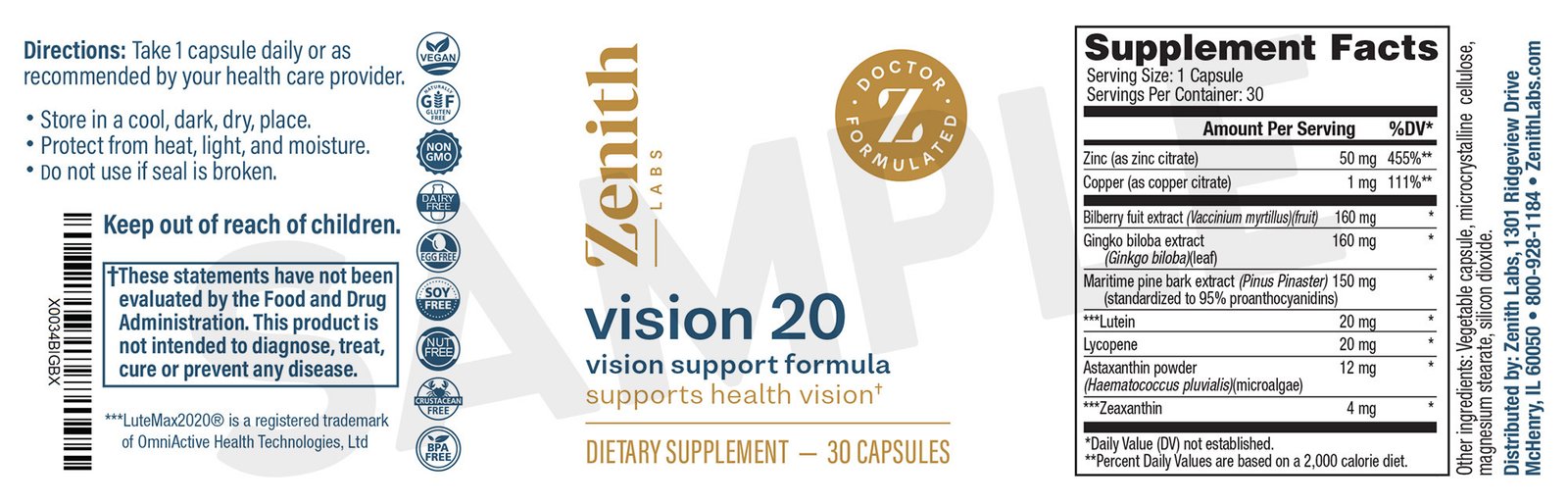
Every capsule lists exactly what you get — no proprietary-blend hiding. Amounts below are taken from the vendor's own Supplement Facts label, which this page treats as the source of truth for what is in the bottle.
Lutein is a yellow carotenoid pigment sourced from marigold flowers, and it is arguably the single most important nutrient in modern eye care. Your body cannot manufacture it; it must come from food — leafy greens, eggs, corn — or from a supplement. Once absorbed, lutein travels to the macula, where it forms the macular pigment that helps filter high-energy blue light and protect the photoreceptors beneath. Higher macular pigment density is associated with better glare tolerance, contrast sensitivity and visual comfort. Vision 20 provides 20 mg of lutein per capsule under the branded LuteMax2020® form — the largest single carotenoid dose on the label, and the centrepiece of the formula.
Zeaxanthin is lutein's partner pigment — and in one way its senior partner: while lutein spreads across the whole macula, zeaxanthin concentrates at the very centre, the fovea, where your sharpest, most detailed vision happens. It shares lutein's blue-light filtering and antioxidant roles, standing guard over the photoreceptors you use for reading, recognising faces and fine work. Zeaxanthin is scarce in the modern diet — orange peppers and egg yolks are among the few meaningful sources — so a dedicated supplement supply matters. Vision 20 provides 4 mg per capsule, paired with its 20 mg of lutein in the classic 5-to-1 ratio found in the macula itself.
Zinc is concentrated in the retina and the choroid beneath it more heavily than almost anywhere else in the body. It is an essential cofactor for antioxidant enzymes that help protect retinal cells, and it plays a practical delivery role too: zinc helps transport vitamin A from the liver to the retina, where it is needed to produce protective melanin and low-light pigments. Vision 20 uses 50 mg of zinc citrate per capsule — 455% of the daily value. That is a high dose, above the 40 mg per day tolerable upper intake level for adults, so do not combine Vision 20 with another zinc supplement or a high-zinc multivitamin without checking the total, and discuss long-term use with your doctor. The formula includes 1 mg of copper precisely because high-dose zinc can lower copper absorption over time.
Copper is zinc's essential balancing partner. Because supplemental zinc can interfere with copper absorption, careful formulas include copper alongside zinc — and Vision 20 follows that logic, pairing its 50 mg of zinc with 1 mg of copper (111% of the daily value). Copper is required to build superoxide dismutase, one of the body's frontline antioxidant enzymes, and it supports healthy connective tissue and the formation of the blood vessels and blood cells that serve the eye. It is a small dose doing an important, often overlooked job in the formula — and a sign that the formulator was thinking about the zinc-copper balance rather than simply loading the label with zinc.
Bilberry, a deep-blue cousin of the blueberry, is one of the classic eye botanicals. Its power lies in anthocyanins — the pigments that give the fruit its colour and its antioxidant strength. Bilberry became famous through the story of WWII Royal Air Force pilots who credited bilberry jam with sharpening their night vision; modern interest focuses on its support for retinal microcirculation, capillary integrity and comfortable dark adaptation. Anthocyanin-rich extracts are also studied for helping to ease the feeling of eye fatigue after long visual work, making bilberry a natural fit for drivers, readers and screen users alike. Vision 20 includes 160 mg of bilberry fruit extract per capsule.
Ginkgo biloba, from one of the oldest tree species on Earth, is herbal medicine's classic circulation supporter. Its leaves provide flavonoids and terpene lactones that help support blood flow through small vessels and protect cells from oxidative stress. In eye care, ginkgo has been studied for its role in supporting healthy blood flow to the optic nerve and retina — tissues that depend on a steady supply of oxygen and nutrients — and for supporting eye pressure already within the normal range. Vision 20 includes 160 mg of ginkgo biloba extract per capsule. One important caution: ginkgo can interact with blood-thinning medication and with some blood-pressure and diabetes medicines, so if you take any of those, show this ingredient list to your doctor or pharmacist before ordering.
Maritime pine bark extract (Pinus pinaster), standardised in Vision 20 to 95% proanthocyanidins, is a concentrated source of plant polyphenols with a long research history in circulation and antioxidant support. Proanthocyanidins are the same family of compounds that give grape seeds and pine bark their reputation for supporting capillary strength and healthy blood flow, including the tiny vessels that serve the retina. Pine bark extract is also studied for its antioxidant capacity and its support for healthy blood pressure already within the normal range. At 150 mg per capsule it is one of the larger doses on the Vision 20 label — and it is one of the four ingredients that appears on the label but not in the sales-page ingredient story, which is exactly why this page works from the label.
Lycopene is the red carotenoid that gives tomatoes and watermelon their colour, and it is one of the most potent singlet-oxygen quenchers among dietary antioxidants — a measure of how effectively it neutralises a particularly damaging form of free radical. Like lutein and zeaxanthin, lycopene is a carotenoid, and carotenoids as a family are the nutrients the vendor's cited Harvard research connects with long-term vision health: in that 26-year study of 102,046 people, those who consumed the most carotenoids had a 40% lower risk of vision problems, according to the vendor. Vision 20 provides 20 mg of lycopene per capsule, a substantial dose that rounds out the formula's carotenoid trio alongside lutein and zeaxanthin.
Astaxanthin, sourced in Vision 20 from the algae Haematococcus pluvialis, is the pigment that makes salmon and shrimp pink — and it is widely described as one of the strongest natural antioxidants known, many times more potent than vitamin C or vitamin E in laboratory measures of free-radical neutralisation. What makes it interesting for the eyes is that astaxanthin is one of the few antioxidants that can cross the blood-retinal barrier, reaching the tissues inside the eye directly, and it has been studied for supporting eye comfort and focus flexibility during long periods of close visual work. At 12 mg per capsule, Vision 20's astaxanthin dose is at the upper end of what eye formulas typically provide. Like maritime pine bark, astaxanthin appears on the label but not in the sales-page ingredient story.
Other ingredients: vegetable capsule, microcrystalline cellulose, magnesium stearate, silicon dioxide. Vision 20 is gluten-free, non-GMO and vegan, and free of dairy, egg, soy, nuts and crustacean ingredients per the label badges. If you are pregnant, nursing, or taking medication, consult your physician before use.
Most review pages quietly repeat whichever ingredient list sounds best. This one will not, because the difference here is real and you should know about it before you buy. The official sales page for Vision 20 tells a story about ten ingredients: lutein, zeaxanthin, zinc, beta-carotene, lycopene, rose hips, vitamin A retinyl palmitate, taurine, grape seed extract and bilberry. The vendor's own Supplement Facts label — the legal list of what is actually in the bottle — names nine different ingredients: zinc, copper, bilberry, ginkgo biloba, maritime pine bark, lutein, lycopene, astaxanthin and zeaxanthin.
Five ingredients from the sales-page story — beta-carotene, rose hips, vitamin A (retinyl palmitate), taurine and grape seed extract — do not appear on the label at all. Four ingredients on the label — copper, ginkgo biloba, maritime pine bark and astaxanthin — do not appear in the sales-page story. The overlap is five ingredients: lutein, zeaxanthin, zinc, lycopene and bilberry. This page uses the label throughout, because the label is what you would actually swallow, and it covers the sales-page-only ingredients only in this note — not as formula ingredients.
There is a second, smaller mismatch worth the same honesty. The distributor address printed on the label is Zenith Labs, 1301 Ridgeview Drive, McHenry, IL 60050. The address shown on the sales page is in Aurora, CO 80011. One of those is a distributor address and the other is the address the vendor uses for sales-page correspondence; the vendor's support channel is listed as zenithlabs.com/contact-us, with phone support at +1 (800) 928-1184. Neither address affects what is in the bottle, but if you ever need to contact the company — for the guarantee, for example — use the support page and phone number above, and keep your order confirmation.
Why does this matter? Because a supplement's value is the sum of what is actually in it, at the doses actually listed. On the label's own terms, Vision 20 is a carotenoid-led formula — 20 mg of lutein, 4 mg of zeaxanthin, 20 mg of lycopene and 12 mg of astaxanthin — with a high zinc dose, a balancing copper dose, and three circulation and antioxidant botanicals. That is a coherent, defensible formula in its own right, and it is the formula this page describes. If the label changes, or the vendor updates the sales page to match it, this page should be updated too — and if you order, compare the label on the bottle you receive against the one shown above.
Vision 20 was designed for adults who can feel their eyes changing — and who would rather support them nutritionally than simply accept a stronger glasses prescription every year. You may recognise yourself in one of these groups:
The reading glasses keep getting stronger, small print takes more effort, and your eyes are slower to adjust between bright light and shade. Vision 20 supports the ageing macula, lens and retina with the nutrients they use daily — lutein and zeaxanthin for macular pigment, zinc for the retina's mineral needs, and a layered antioxidant team for the oxidative stress that accumulates with age.
If your work and leisure both live on screens — computer all day, phone all evening — your eyes get a daily dose of blue light and close-range strain. Macular pigment support and antioxidant defence are built for exactly this pattern, and astaxanthin has been studied specifically for eye comfort during long periods of close visual work.
Oncoming headlights, wet roads at dusk, dim signage: night driving is where ageing eyes complain first. Bilberry and ginkgo biloba in the formula support dark adaptation and healthy retinal circulation, and zinc supports the vitamin A transport the retina uses for its light-sensing pigments — the combination the vendor points to for low-light vision support.
Few adults eat enough leafy greens, eggs and colourful vegetables to cover lutein and zeaxanthin needs — and a family history of age-related eye concerns is a good reason to start early. One capsule a day delivers 20 mg of lutein and 4 mg of zeaxanthin, plus the rest of the label's nine nutrients, in a single routine that is easy to keep.
An honest boundary: Vision 20 is a nutritional supplement, not a treatment. If you have been diagnosed with an eye disease, are pregnant or nursing, or take prescription medication — especially blood thinners, blood-pressure medicine or diabetes medicine, because of the ginkgo — speak with your doctor before using it. And never let any supplement replace regular comprehensive eye exams, which catch problems that nutrition alone cannot. If you notice sudden vision changes, flashes of light, a shadow or curtain over your vision, or eye pain, seek urgent medical care — those are not supplement questions.
Nutritional support works on the body's timetable, not a stopwatch. Individual experiences vary — this is a realistic map of the first six months, the full length of the guarantee.
The first fortnight is about building the habit: one capsule a day, with or without food, at whatever time suits you. Your body begins replenishing nutrient stores that may have run low for years. Don't expect dramatic changes yet — eye tissues turn over slowly. The vendor says some people have reported benefits as early as two weeks; treat that as the vendor's claim, not a promise, and use these first weeks to notice your baseline — how your eyes feel after a long screen day, in bright light, and on the drive home at dusk.
By the end of the first bottle, carotenoid and mineral levels have had a month of steady supply. This is groundwork, not the finish line: macular pigment accumulates gradually, and zinc and copper are working quietly in the background. Some users say long screen days feel a little easier by now; others notice nothing yet. Both are normal — consistency is what matters, and one capsule a day makes consistency easy.
Lutein and zeaxanthin continue concentrating in the macula, and the antioxidant team — astaxanthin, lycopene, bilberry and maritime pine bark — has had two months of daily supply. This is typically the window where people begin forming first impressions: how their eyes handle bright light, headlights and end-of-day reading. It is a good time to note whether your eyes feel more comfortable in your current glasses prescription, and whether low-light situations feel any easier.
Ninety days is the fair test most eye-nutrition routines ask for — and the reason the 3-bottle package exists. Compare like with like: the menu in a dim restaurant, the small print on a label, the drive home at dusk, the last hour of a long screen day. If your eyes feel meaningfully better supported, you have your answer; if not, half your guarantee still remains, and the 6-bottle package exists precisely so the full six-month trial costs less per bottle.
With nutrient stores established, the focus shifts to maintenance — the daily protection of tissues that cannot simply be replaced once lost. Pair the routine with the habits that multiply its value: sunglasses outdoors, leafy greens on the plate, regular screen breaks, and your annual eye exam booked and kept. This is also the right window to review the zinc question with your doctor: if you have been taking 50 mg of zinc daily for four months, a quick check that your overall zinc intake and copper status are sensible is worth having.
Six months is the complete trial the guarantee allows. By now you have given the formula a genuinely fair chance — long enough for slow eye tissues to respond. If you are not satisfied with the support you feel, contact support through zenithlabs.com/contact-us or on +1 (800) 928-1184, return the bottles (even empty) and claim your refund. If you are satisfied, you have a one-capsule routine that costs as little as $33 a bottle on the 6-bottle package.
Most people weighing up Vision 20 are really choosing between four paths. Here is an honest look at what each one does — and doesn't — do.
A daily nutritional approach. One capsule supplies lutein, zeaxanthin, lycopene and astaxanthin for macular pigment and antioxidant defence, zinc and copper for the retina's mineral needs, and bilberry, ginkgo and maritime pine bark for circulation support — all from within. It does not correct refractive error — you will still need your glasses — but it addresses something glasses cannot: the nutrient side of eye ageing. From $33 a bottle on the 6-bottle package, covered by a 180-day money-back guarantee.
Essential, immediate and precise: lenses bend light so the world snaps into focus, and everyone whose prescription calls for them should wear them. But a lens sits in front of the eye — it neither nourishes the retina nor slows the nutritional wear that changes prescriptions over time. Costs also recur: exams, frames, lenses or contact supplies add up year after year, while a supplement routine costs a fixed amount per day.
A general multivitamin is better than nothing for overall health, but eye support is usually an afterthought: token amounts of vitamin A, little or no lutein and zeaxanthin at studied levels, and none of the targeted botanicals — bilberry, ginkgo, maritime pine bark, astaxanthin — that dedicated eye formulas are built around. If your goal is specifically your eyes, a generalist product is rarely designed to get you there. One caution runs the other way too: a multivitamin plus Vision 20 can double up on zinc, so check the totals.
The simplest option, and for a while it feels free. But the forces acting on ageing eyes — light exposure, oxidative stress, nutrient gaps in a modern diet — do not pause. Retinal cells and macular pigment lost to years of wear cannot simply be regrown later. Supporting your eyes early, while they are still healthy, is the one option that cannot be bought back afterwards — and at one capsule a day, the routine itself is about as light as a health habit gets.
Order through the official checkout to qualify for the guarantee and bonuses. Every package is covered for 180 days. Prices below are those published on the official sales page at the time of writing — always confirm the final terms at checkout.
⚠ High demand — this discounted pricing is not guaranteed to last.
The two e-books below are included free with the 3-bottle and 6-bottle packages. The vendor claims the two bonuses together are worth $5,990 — that is the vendor's valuation, and this page does not endorse it; the books are digital downloads, and their value to you is the recipes and the reading, not the headline number.
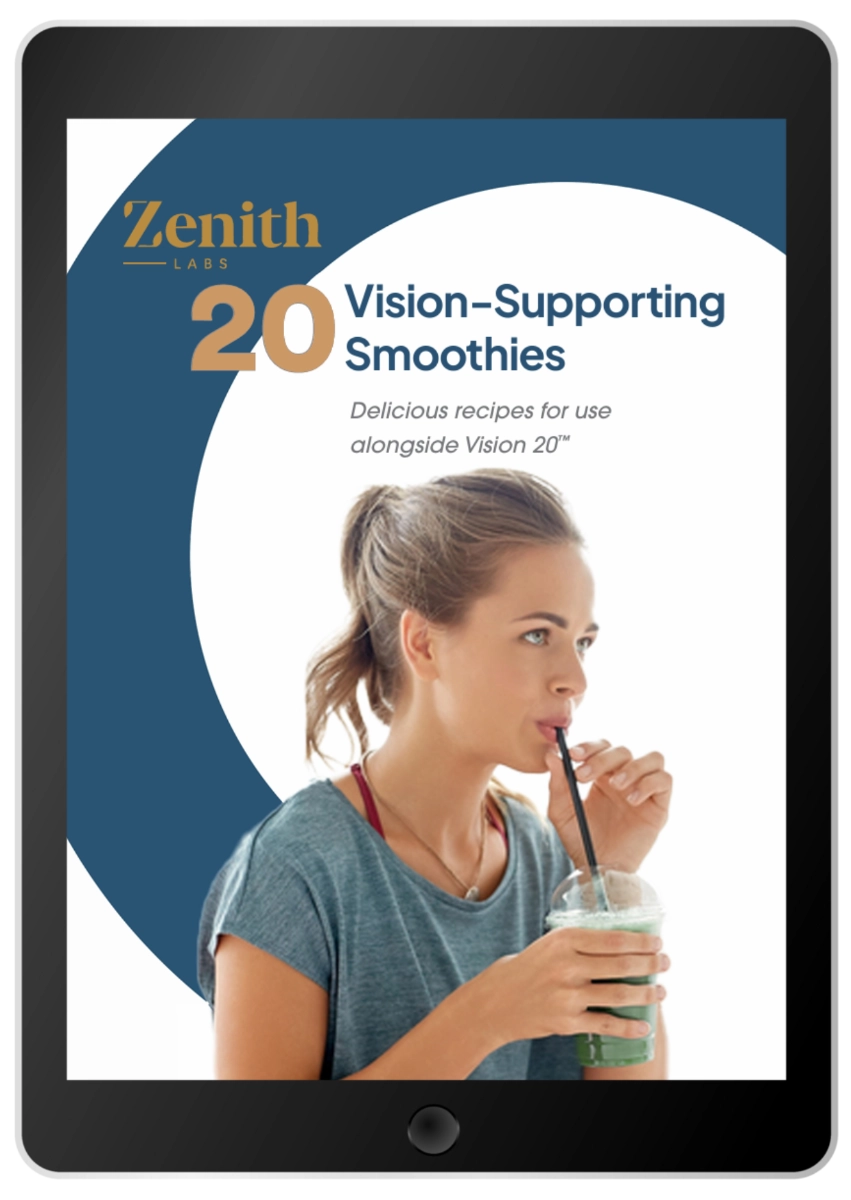
Delicious smoothie recipes designed to be used alongside Vision 20 — built around the same kinds of foods the formula draws on, including leafy greens, berries and other carotenoid-rich ingredients, so your diet and your supplement are pulling in the same direction. FREE with 3- and 6-bottle orders
A guide to the habits the vendor associates with healthy ageing — sleep, movement, nutrition and stress — presented as science-backed secrets for an ageless mind and body. Read it as a lifestyle companion to the supplement, not as medical advice. FREE with 3- and 6-bottle orders
Try Vision 20 for a full six months. If you don't feel the support for your eyes, simply contact support, return the bottles (even if they're completely empty), and you'll receive a full, no-questions-asked refund of 100% of your purchase price.
Here is exactly how it works. Your 180 days start on the day you place your order. Use the full supply — take one capsule daily and give the formula a fair trial. If at any point in those six months you decide Vision 20 is not for you, contact the support team through zenithlabs.com/contact-us or on +1 (800) 928-1184, send back the bottles (empty is fine), and your purchase price will be refunded to your original payment method — no questions, no restocking drama, no obligation to explain yourself. The guarantee covers orders placed through the official website, which is one more reason to buy there rather than from third-party marketplace sellers. Keep your order confirmation and the address on your bottle's label (Zenith Labs, 1301 Ridgeview Drive, McHenry, IL 60050) in case you need them.
TRY Vision 20 RISK-FREE FOR 180 DAYS →Each bottle contains 30 capsules — a 30-day supply. Take 1 capsule once daily, with or without food, at any time of day. There is no second dose to remember and no timing around meals, which is the whole point of the one-capsule design.
Eye nutrition builds gradually. The vendor says some people have reported benefits as early as 2 weeks, but that is the vendor's claim, not a tested finding — there is no clinical trial of the finished product. A realistic expectation is to judge the formula over 60–90 days of consistent use, which is why the 3- and 6-bottle packages — and the 180-day guarantee — exist. Individual results vary, and macular pigment builds slowly.
This is a real discrepancy, and this page flags it rather than hiding it. The sales page tells a story about ten ingredients — lutein, zeaxanthin, zinc, beta-carotene, lycopene, rose hips, vitamin A retinyl palmitate, taurine, grape seed extract and bilberry. The vendor's own Supplement Facts label lists nine: zinc, copper, bilberry, ginkgo biloba, maritime pine bark, lutein, lycopene, astaxanthin and zeaxanthin. Beta-carotene, rose hips, vitamin A, taurine and grape seed extract do not appear on the label, while copper, ginkgo biloba, maritime pine bark and astaxanthin do not appear in the sales-page story. This page uses the label as the source of truth, because the label is what you would actually swallow. Before you order, compare the label on the bottle you receive against the label shown in the ingredients section above.
According to the vendor's own Supplement Facts label, one capsule contains: zinc (as zinc citrate) 50 mg, copper (as copper citrate) 1 mg, bilberry fruit extract 160 mg, ginkgo biloba extract 160 mg, maritime pine bark extract (standardised to 95% proanthocyanidins) 150 mg, lutein (LuteMax2020®) 20 mg, lycopene 20 mg, astaxanthin powder (Haematococcus pluvialis) 12 mg, and zeaxanthin 4 mg. Other ingredients: vegetable capsule, microcrystalline cellulose, magnesium stearate, silicon dioxide. Serving size is 1 capsule, 30 servings per bottle.
The distributor address printed on the label is Zenith Labs, 1301 Ridgeview Drive, McHenry, IL 60050. The address shown on the sales page is in Aurora, CO 80011. One is the distributor address on the product label and the other is the address the vendor uses for sales-page correspondence. It does not affect what is in the bottle, but if you need to contact the company — for the guarantee, for example — use the support page at zenithlabs.com/contact-us or phone +1 (800) 928-1184, and keep your order confirmation.
No — and no dietary supplement is. The FDA does not approve dietary supplements. The vendor describes the facility that makes Vision 20 as regularly audited by the FDA, and this page phrases it exactly that way. A facility being regularly audited is not the same as a product being FDA approved, and any page that shows an "FDA Approved" badge for a supplement is misleading you. This page carries no such badge.
The vendor points to a Harvard study that followed 102,046 people over 26 years and found that those who consumed the most carotenoids had a 40% lower risk of vision problems. That is the vendor's claim about a study of dietary carotenoids in general — it is not a study of Vision 20 itself, and it does not prove that taking this supplement produces the same result. The vendor also says the formula is backed by over 19 peer-reviewed studies; again, that refers to published research on the ingredients, not to a trial of the finished product. This page reports both claims as the vendor's claims, not as facts about Vision 20.
No whole-product clinical trial of Vision 20 exists. The vendor's own press material describes the formula as a formulation rationale built on published ingredient research, not as a clinical finding from a trial of the finished product. That is an important distinction: the ingredients have research behind them, but the specific combination in this bottle, at these doses, has not been tested as a whole in a published trial. Every benefit on this page is therefore written in supports, helps and promotes language, never as a proven outcome.
It is high, and you should know the numbers. One capsule contains 50 mg of zinc — 455% of the daily value — which is above the 40 mg per day tolerable upper intake level for adults. Long-term high-dose zinc can lower copper absorption, which is why the formula also includes 1 mg of copper. Do not combine Vision 20 with another zinc supplement or a high-zinc multivitamin without adding up the total, and talk to your doctor about long-term daily use, especially if you take medication or have a condition affecting mineral absorption. Short-term use at this dose is common in eye formulas, but the decision to take 50 mg of zinc every day for months is one to make with your physician, not from a sales page.
Talk to your doctor first. The formula contains 160 mg of ginkgo biloba extract per capsule, and ginkgo can interact with blood-thinning medication, as well as with some blood-pressure and diabetes medicines. This is the second most important safety detail on the label after the zinc dose. Show your doctor or pharmacist the full ingredient list — the label image in the ingredients section above has every dose — and follow their advice before ordering.
Vision 20 uses well-known nutrients and botanicals, and most people combine it with their usual routine without issue — but two cautions deserve attention. First, the ginkgo biloba can interact with blood thinners and some blood-pressure and diabetes medicines. Second, the formula already supplies 455% of the daily value of zinc, so check for overlap with a multivitamin or any other zinc supplement before stacking them. If you take prescription medicine, manage a health condition, or are pregnant or nursing, show the ingredient list to your doctor or pharmacist before starting.
Consult your physician first. The label itself carries that advice, and it matters more here than with most supplements because of the high zinc dose — 50 mg per capsule is well above the daily value, and pregnancy and nursing change mineral needs and safe upper limits. Do not start Vision 20 while pregnant or nursing on the basis of a sales page; ask your doctor, show them the label, and follow their guidance. Keep the bottle out of reach of children.
No — and any supplement that claimed otherwise would not be worth trusting. Vision 20 supports eye health nutritionally; it does not diagnose, treat or correct any condition, and it is not a substitute for eye exams or prescribed care. Keep your regular comprehensive eye exams, wear your prescribed glasses, and seek prompt medical care for sudden vision changes, flashes of light, a shadow or curtain over your vision, or eye pain.
Yes, according to the badges on the vendor's own label. Vision 20 is gluten-free, non-GMO and vegan, and free of dairy, egg, soy, nuts and crustacean ingredients. The capsule is a vegetable capsule, and the only other ingredients listed are microcrystalline cellulose, magnesium stearate and silicon dioxide. If you have a specific allergy or sensitivity, review the full Supplement Facts label shown in the ingredients section, or ask your physician before ordering.
Orders of 3 or 6 bottles include two free e-books: "20 Vision-Supporting Smoothies", with recipes designed to be used alongside Vision 20, and "Forever Young: Science-Backed Secrets for an Ageless Mind & Body". The vendor claims the two bonuses together are worth $5,990 — that is the vendor's valuation, and this page does not endorse it. The books are digital downloads; judge them on the recipes and the reading, not on the headline number. The 1-bottle package does not include the bonuses.
On the official sales page at the time of writing: 1 bottle costs $59 plus $9.95 USA shipping (a 30-day supply); 3 bottles cost $49 per bottle, $147 in total, plus $9.95 shipping (a 90-day supply, saving $30 against the single-bottle price); 6 bottles cost $33 per bottle, $198 in total, with free USA shipping (a 180-day supply, saving $156 — about 44% off the single-bottle price). Prices and shipping terms can change, so always confirm the final figures at checkout before ordering.
Vision 20 is listed as a single payment, not a subscription, and there is no auto-ship programme described on the sales page. However, an upsell is offered at checkout, so confirm on the checkout page itself that you are paying a one-time amount and that you have not accepted any additional offer you do not want. What you see at checkout is what you should pay — check the order total before confirming, and keep your receipt.
Every order is covered by a 180-day, no-questions-asked money-back guarantee, refunding 100% of your purchase price. If at any point within 180 days of ordering you decide Vision 20 is not for you, contact support through zenithlabs.com/contact-us or on +1 (800) 928-1184, return the bottles (even empty), and your purchase price is refunded to your original payment method. Keep your order confirmation, and note that the guarantee covers orders placed through the official website.
Only through the official website — the official sales page is at bestvisionsupport.com/cb. Vision 20 is not sold in stores, and bottles appearing on marketplaces or auction sites are offered by third-party sellers and are not covered by the 180-day guarantee, so the official site is the safe place to buy. Checkout is handled securely by ClickBank.
Vision 20 is made by Zenith Labs, a US supplement company whose Medical Research Director is Dr. Ryan Shelton. The distributor address printed on the product label is Zenith Labs, 1301 Ridgeview Drive, McHenry, IL 60050, while the sales page shows an Aurora, CO 80011 address — the discrepancy is flagged in the ingredients section above. Support is listed via zenithlabs.com/contact-us and phone +1 (800) 928-1184.
Absolutely — most users do. Vision 20 is nutrition, not a lens: it supports the health of the eye itself, while your glasses or contacts correct your focus. The two work on different things and pair naturally. Keep wearing your prescribed correction and keep up with your regular eye exams, and let the supplement handle the nutritional side that your lenses can't.
This is a good example of why the label matters more than the sales page. The sales-page ingredient story names vitamin A (retinyl palmitate) and beta-carotene, and high-dose beta-carotene carries a known caution for smokers — but neither vitamin A nor beta-carotene appears on the vendor's Supplement Facts label at all, so the smoker caution for those ingredients does not apply to the label formula. What is actually in the bottle, per the label, is the nine-ingredient list in the ingredients section above. If you smoke, the ingredients you should actually discuss with your doctor are the ones on that label — above all the 50 mg zinc dose and the 160 mg of ginkgo biloba.
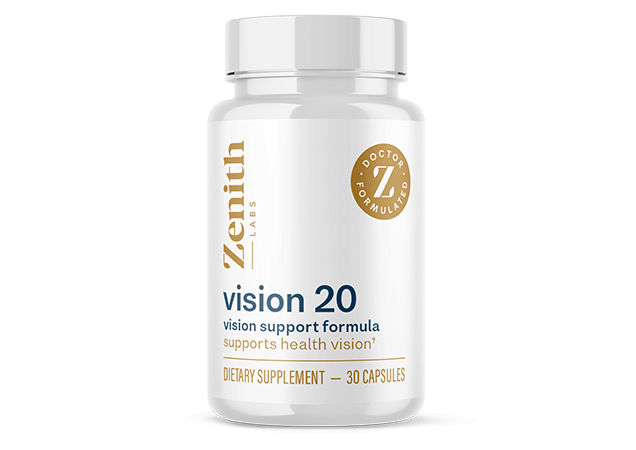
Support your eyes with 9 label-listed nutrients in one capsule a day, for as little as $33 a bottle, backed by a 180-day money-back guarantee.
CLAIM YOUR 44% DISCOUNT NOW →